10 Reasons You Should Trek Kanchenjunga Base Camp
Kanchenjunga Base Camp
Kanchenjunga Base Camp Trek Located on the eastern border of Nepal, this trekking trail is shorter than the Everest base camp trek and the Annapurna base camp treks. Because of its detachment from the outer world, Kanchenjunga base camp is regarded as an “off-the-beaten-path” trek.
1. Remote and Off the Beaten Trek
Kanchenjunga Base Camp is in an off-the-beaten-track trekking region of Nepal. It is fully remote, pristine, and intact from the outside world. Despite its eye-catching natural beauty, only a handful of visitors trek to this area. Low inflows of travelers have completely isolated this trail and created the need for a guide to explore its remoteness.
With the help of a trained and skilled guide, you can explore the hidden views of this remote region. Because of the low popularity and influence of the modern world, you can get to experience the traditional touch on the lives of the people. Similarly, ancient cultural heritage has its original value. Moreover, you can find the tradition that was being developed by our ancestors and their generation following it as it is.
2. Kanchenjunga Conservation Area
The main attraction of the Kanchenjunga base camp trek is that you get to explore the Kanchenjunga Conservation Area, home to numerous flora and fauna along with varieties of wildlife. It covers a total area of 2,035 square kilometers.
You can perform activities like bird watching and floral exploration on your trail with the help of an experienced guide. It consists of 250 species of birds, including Fulvetta, Snow Cock, Ashy Drongo, Impeyan Pheasant, etc. It also consists of some endangered wildlife, like the snow leopard and red panda. It consists of 30 rhododendrons, 69 orchids, and many other species of plants like lilies, primula, etc.
3. Opportunity to Travel in Group
Being the restricted area of Nepal’s great Himalayas, the government has made it a rule to have at least two members for the Kanchenjunga base camp trek. Group travelling is the solid idea if you want to obtain infinite entertainment on the way. A group consisting of an experienced guide adds more value to this trek.
You will not only see views, but you will also be able to collect information about this trail. For those who love to travel in groups, sharing experiences and stories of their travels with each other, this trekking trail is waiting for you. Make your group, plan the trek, and book the tickets. Traveling in groups and with a guide is popular to avoid the Kanchenjunga trek’s difficulty and excessive cost.
4. Tackle the Kanchenjunga Trek’s Difficulty
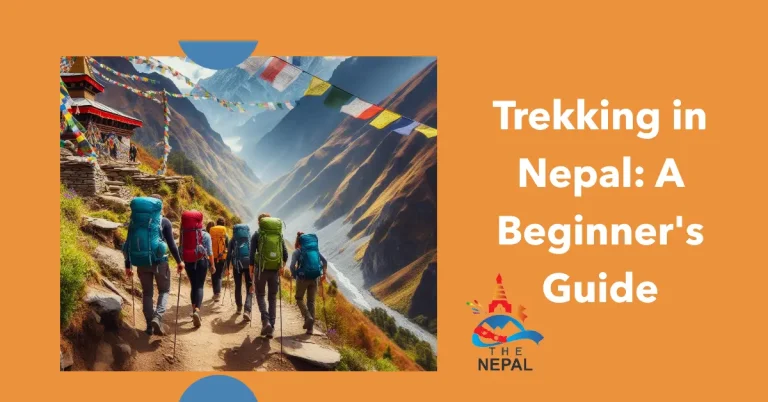
The Kanchenjunga trek is demanding, as the highest point of Kanchenjunga North Base Camp is 5,200m. It also goes through several hard ascents and descents. With the increasing altitude on the trek, Kanchenjunga’s difficulty level also rises. However, one can easily tackle this difficulty, as for this trekking trail, you need to have a registered guide.
Trekking to Kanchenjunga Base Camp becomes less difficult and more comfortable with the help of a registered guide. Language barriers, the exact route towards the Kanchenjunga trek, finding the tea house in a remote area, etc. can be solved with the help of a local guide. Knowledge of the trekking guides can help you easily pass the dangerous trails, difficult high passes,
valleys, rocky paths, etc.
5. Crossing High-Altitude Passes
The Kanchenjunga Base Camp Trek offers mesmerizing beauty along with a moderate level of difficulty. Passing the challenges successfully depends on your chosen guide. Crossing
South and north base camps, along with the three high altitude passes (Sele La Pass (4,200m), Mir-gin La Pass (4,026 m), and Sinon La Pass (4,663m), make this trek the number one choice for adventure fanatics.
Credit for the success rate of this trek goes all to the guide. This trek challenges your soul as you need to walk on rough terrain and have to spend many nights at higher altitudes. By hiring a skilled guide, you can easily pass through the difficult passes. However, Kanchenjunga’s difficulty is replaced by the breathtaking scenery that you get.
to observe on the way while crossing high passes.
6. Rich local culture and traditions
The lower part of the Kanchenjunga is inhabited by the Rai, Limbu, and Gurung, and we can find groups of the Brahmin and Chhetri too. The upper part of Kanchenjunga is inhabited by many Sherpa people. Because of this, the Kanchenjunga area is a mixture of rich local culture and religion. The requirement of a guide is a must in order to gain knowledge about the mixed culture of this area.
They follow Tibetan Buddhism as they are influenced by Tibetan culture. The warm hospitality of the locals and their rich culture and traditions will bring peace to your heart. You can explore different small temples in the lower part of the region. In the upper part, you can explore monasteries, mani walls, prayer flags, and chortens. You can find traces of Tibetan origins in the belief systems of locals.
7. Stunning views of the massive mountains
Viewing the snow-capped mountains and taking photos and videos by flexing those scenes gives you another level of satisfaction. For this purpose, no other trek than the Kanchenjunga base camp trek can be perfect. It might be hard to reach the actual spot from where visualization of the peaks can be done. But an experienced guide will easily take you to the spot where you will start drooling because of the crystal-clear panorama. Remember to capture the photographs, as they are the only thing that lasts forever with you.
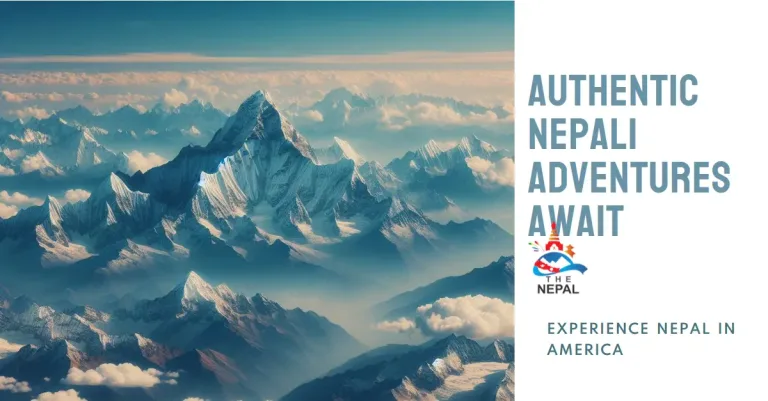
The two base camps of the Kanchenjunga—the south base camp (Pangpema) and the north base camp (Oktang)—are the perfect points from which splendid peak scenes of Nepal can be captured. The close-up views of the mountains Lhotse (8,516m), Everest (8,848m), Kanchenjunga (8,586m), Makalu (8,481 m), etc. make this trek worth remembering for a lifetime.
8. Stunning, picturesque valleys and glaciers
Besides rich culture and high mountains, the Kanchenjunga base camp trek offers you the exploration of the many beautiful valleys in the lap of the high hills and Himalayas. Tamor Valley, Ghunsa, Ramche, Lhonak, Khambachen, etc. are the popular destination areas of Kanchenjunga. You will reach the Kanchenjunga base camp by crossing all these valleys in
your trails.
Glaciers like Nyukla, Kumbhakarna, Ramdung, Kanchenjunga, Yalung, Tso, etc. add beauty to Kanchenjunga. Crossing the difficult valleys and glaciers of remote areas can be hard without any guidance from the guide.
9. Exploration of rivers and majestic waterfalls
Trekking to Kanchenjunga takes you to the wonderful geography of this area. On the way, you will be able to observe many small rivers like the Tamur river, the Ghunsa river, the Simbuwa river, the Walungchung river, etc. Because of high and low geological structures, the Kanchenjunga area’s rivers and waterfalls lie in the corners, which can be witnessed only by the experienced eyes of a guide.
You can even witness the spectacular 150-meter-high waterfall on the way to Amjilasa. So, with the help of a registered guide who has enough experience in this field, you can explore all
these hidden rivers and waterfalls.
Note: If you are thinking about trekking alone, then you need to obtain a “Ghost Permit’ (paying double the permit cost and traveling with the real person’s name). It will be your loss, as you will have to pay double. Also, you will not be able to have real fun without a guide on the Kanchenjunga base camp trek.
10. Kanchenjunga’s Permit Cost
As the region is restricted, you will need to get a restricted area permit from the Department of Immigration. To get a permit, there must be at least two people and a government-certified guide. Because of the compulsion of needing a registered guide to obtain a permit, there is no other option other than traveling with a guide.
You will need a Kanchenjunga Conservation Area Entry Permit (KCAP) and a Restricted Area Entry Permit (RAP) for the trail in Tapethok and Yamphuding VDCs.
How safe is it to travel to Kanchenjunga Base Camp?
Being a moderate-level trekking region and a restricted area, the Kanchenjunga camping trek is somehow hard. Because of the wilderness, your experience will be completely new, which might puzzle you. However, it is achievable and easier with the help of a professional guide and by carrying the necessary personal equipment.