Muktinath Temple Travel
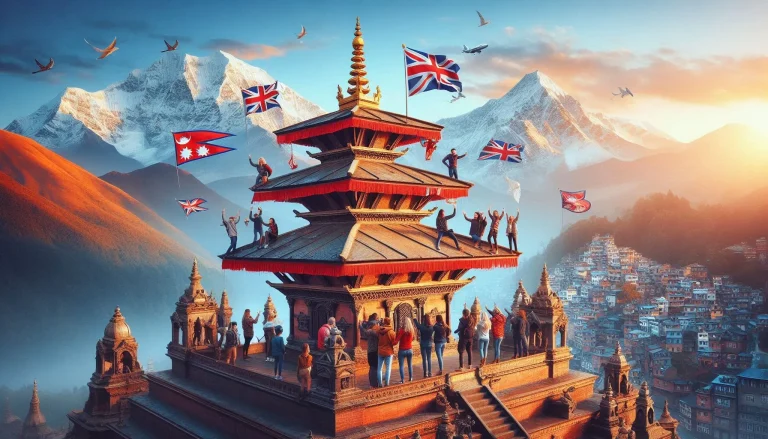
The Muktinath temple Travel is one of the most popular pilgrimage tours in Nepal. The Muktinath temple is one of the holy Hindu temples devoted to Lord Vishnu. In Hinduism, Lord Vishnu is the god of protection, and the temple has a Vishnu god on it. The location of the temple is in the high Himalayas, below the Thorong Peak at an altitude of 3800 meters.
The stunning views of Dhaulagiri (8,167 meters) and Nilgiri (7,600 meters) make the tour even more splendid. You can see numerous peaks around the valley, plus the colorful desert-type landscapes are even more pretty to see. Muktinath temple tour can be done either by doing the Annapurna Circuit Trek to come to Muktinath after crossing the Thorong La Pass (5416 meters) or by driving to Muktinath temple from Pokhara or Kathmandu.
The temple is a major attraction for both Hindus and Buddhists, as the Buddhists also worship at Muktinath temples. Below this table, we give you all the information regarding the Muktinath temple tour.
Muktinath temple tour is one of the delightful holy temples that have been built in a pagoda-style design, and it is dedicated to Lord Bishnu. There are two Mukti Kunda in the yard of the Muktinath temples where the devotees take a bath. On the backside of the temples, there are 108 water spouts in the shape of cow heads. These water taps are for the devotees to take the bath, and Hinduism believes that the sins fade out if you take the bath on all 108 taps.
Muktinath
Muktinath temple in Nepal is a Vishnu temple that lies in Ranipauwa Village of Mustang district of Gandaki state. The temple is sacred to both Hindu and Buddhist devotees. The name “Muktinath” is derived from the Sanskrit words “Mukti” and “Nath” where Mukti refers to “salvation or moksha,” while Nath stands for “God”. This is how the name Muktinath came about. That is the reason why these temples attract thousands of devotees from all over the world.

According to Hindu beliefs, Lord Vishnu got salvation from the curse of Brinda, which is why the temple is worshipped as a salvation place, which is Muktinath. The self-originated shrines are believed to be one of the eight shrines, of which seven (Srirangam, Sri Mushnam, Tirupati, Naimisaranyam, Thothadri, Pushkaram, and Badrinath) are in India.
It is a highly devoted pilgrimage site for the Visnu community and Hindu people. That is the reason a lot of Hindus from Nepal and India come here for the blessing of Muktinath as well as to see the fantastic landscape of the Mustang. The numerous mountains, as well as colorful lands, are waiting for you to welcome them and give you spirituality and God-gifted nature scenery.
Mukti Kunda is the small pond that is outside of the Muktinath temple. The ponds are made for the Hindu devotees to take a bath in them before they enter the temple. This pond’s water gives purification to the devotees. The ponds are not that big, and the names of the ponds are Laxmi Kunda and Saraswati Kunda. Taking a bath in this pond removes your sin and “negative karma.”
Attraction of Muktinath
Mukti Dhara
Mukti Dhara is another interesting thing that you can do on your Muktinath temple tour. Muktinath Temple, 108 Dhara, is very scared, which is Behind Muktinath Temple, on three sides, there are 108 water spouts in the shape of a cow, which are always full of water. There is no water resource you can see, but the locals believe that it came through the mountains above Muktinath.
The water then goes into the Kali Gandaki River, where you find the holy Shaligrams. According to Hindu beliefs, if you take a bath on all taps, then your sins wash out and you get good health and prosperity. Hindu devotees take baths under the ice-cold water of 108 waterspouts, believing that it brings them salvation.
Gomba
After completing prayer and puja at the temple, a visit to Mharme Lha Khang Gomba, the monastery dedicated to Guru Rimpoche (Padmasambhava), with his huge image situated to the north of Muktinath Temple,
Jwalamai Temple: The continuously burning flame “Jwala Mai Temple” and the sound of a flowing river are situated south of Muktinath Temple. The Jwala Mai temple has a spring, and there are three eternal flames: “Holy Flame from Soil,”, “Holy Flame from Rock,” and “Holy Flame from Water,” fed by natural gas. Currently, two flames are continuously burning. Hindus believe that this miracle of fire lighting was an offering made by Brahma.
Hindus worship the fire as Jwala Mai (the lit goddess of fire). The Buddhists called it Dhola Mebar. Gomba Samba, a newly built monastery with the main deities Sakyamuni, Chingresig, and Guru Rimpoche situated to the left of the entrance gate of the Muktinath temple complex, would be worth it.
Shaligrama
Another attraction for the pilgrimage is the River Kali Gandaki, from where one can collect fossils of the Jurassic Park age. One may find a fossil within a few minutes, or it may take hours without success. However, these fossils can be had from the locals for a price. Shaligram, a black stone fossil if found, is considered sacred and is kept in the pooja (prayer) room of the house. It is supposed to be a symbol of Lord Vishnu.
Gomba Samba, a newly built monastery with the main deities Sakyamuni and Chingresig and situated to the left of the entrance gate of the Muktinath temple complex, would be worth it.
Kunda
In front of Muktinath Temple there are two kundas (water ponds), called Saraswoti and Laxmi kundas, where holy dip is believed to wash away negative karma, the results of one’s past negative actions.
Jwalamai Temple
The continuously burning flame “Jwala Mai Temple” and the sound of a flowing river are situated south of Muktinath Temple. The Jwala Mai temple has a spring, and there are three eternal flames: “Holy Flame from Soil,”, “Holy Flame from Rock,” and “Holy Flame from Water,” fed by natural gas. Currently, two flames are continuously burning. Hindus believe that this miracle of fire lighting was an offering made by Brahma. Hindus worship the fire as Jwala Mai (the lit goddess of fire). The Buddhists called it Dhola Mebar. Gomba Samba, a newly built monastery with the main deities Sakyamuni, Chingresig, and Guru Rimpoche situated to the left of the entrance gate of the Muktinath temple complex, would be worth it.
Read Also :