Internet in Nepal for Remote Work: Speed, Providers & Tips
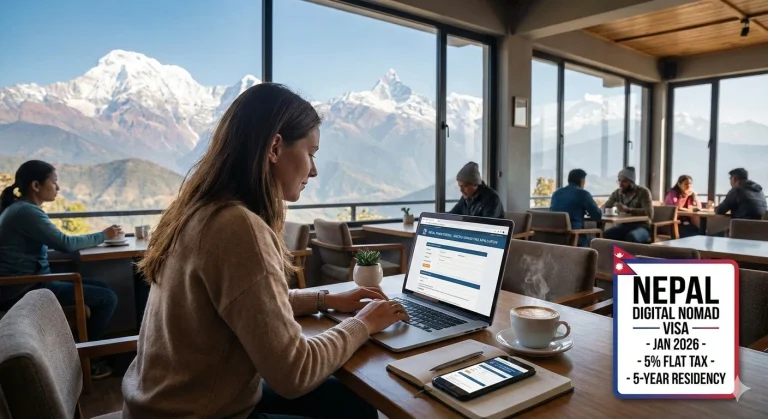
The most common question for any digital nomad considering Nepal is: “Is the Wi-Fi good enough for a Zoom call?” In 2026, the answer is a resounding yes. Nepal has undergone a massive digital transformation, with fiber-optic internet reaching not just the major cities, but many mountain towns as well. Whether you are coding in a Kathmandu café or managing a team from a lakeside retreat in Pokhara, here is the ground reality of staying connected in the Himalayas.
Internet Speed & Infrastructure (2026 Update)
Nepal’s internet landscape has shifted from “unreliable” to “high-speed” over the last few years.
- Fiber-to-the-Home (FTTH): This is now the standard in urban areas. Most modern apartments and hotels offer dedicated fiber lines.
- 5G Availability: As of 2026, commercial 5G is operational in the Kathmandu Valley and parts of Pokhara, providing a vital high-speed backup for remote workers.3
- Median Speeds: You can expect median fixed broadband speeds of around 80–110 Mbps, though plans up to 1 Gbps are widely available for “power users.”
Read More : Nepal Digital Nomad Guide (Visa, Cost, Internet, Cities & Life)
| Connection Type | Average Speed | Best For |
| Standard Home Fiber | 100 – 200 Mbps | Video calls, streaming, and daily tasks. |
| Premium/SME Fiber | 300 Mbps – 1 Gbps | Large file uploads, 4K editing, and gaming. |
| Mobile 4G/LTE | 20 – 50 Mbps | Basic browsing and emergency hotspots. |
| Mobile 5G (Urban) | 100+ Mbps | High-speed tethering in city centers. |
Top Internet Service Providers (ISPs) in Nepal
If you are renting a long-term apartment, you will likely encounter these three major players:
- WorldLink: The largest ISP in Nepal. They offer the most widespread “Wi-Fi Express” hotspots across the country, allowing you to use your home login at thousands of locations.
- Classic Tech: Known for being the most budget-friendly and forward-thinking with Wi-Fi 6 routers, which offer better range and multi-device stability.
- Vianet: A favorite among nomads for its consistent customer service and reliable speeds in Kathmandu and Lalitpur.
- DG Link : Based in the Shuklagandaki Valley (Tanahun district), DG Link is an excellent choice if your remote work base is in the scenic regions between Kathmandu and Pokhara.
Best SIM Cards & Mobile Data for Nomads
Don’t rely on your home country’s roaming—local SIM cards are incredibly cheap and easy to get at the airport or any local shop.7
- Ncell (Private): Usually the best for digital nomads staying in Kathmandu or Pokhara. It offers the lowest latency (ping), which is crucial for smooth video conferencing.
- Top Pick: The “TouristPro Voyager” pack (~$15 USD) gives you 100GB of data for 28 days.
- Nepal Telecom (NTC/Namaste – Government): The king of coverage. If you plan to work from a trekking trail or a remote village (like Manang or Namche Bazaar), NTC is more likely to have a signal.
- eSIMs: Both Ncell and NTC now offer eSIMs for tourists, making it easy to keep your home number active alongside your local data.
Working Through Power Outages
While the “load shedding” (scheduled blackouts) of the past is gone, short, unscheduled power blips can still happen due to weather or maintenance.
- Coworking Spaces: Every reputable coworking space in Nepal (like Rem.work or Himalayan Workspace) has heavy-duty battery backups or generators to ensure 100% uptime.
- The “Mini UPS” Trick: If you are working from home, buy a small DC Router UPS (around $15–$20 USD). It keeps your internet router running for 4–6 hours even if the lights go out, allowing you to keep working on your laptop battery.
Pro-Tips for Reliable Remote Work in Nepal
- The Dual-SIM Strategy: Carry an Ncell SIM for high-speed urban work and an NTC SIM as a backup for when you head into the hills.
- Check Before You Rent: Always ask a potential Airbnb host for a screenshot of a Speedtest.net result and confirm they have a power backup for the router.
- Public Wi-Fi: Avoid it for sensitive work. Use a VPN and stick to your mobile hotspot or trusted café/coworking networks.