Guide To Nepal Digital Nomad
For years, Nepal was the “off-the-grid” destination for backpackers and spiritual seekers. But as of 2026, the secret is out: the “Roof of the World” is now one of the most exciting hubs for remote workers in Asia.
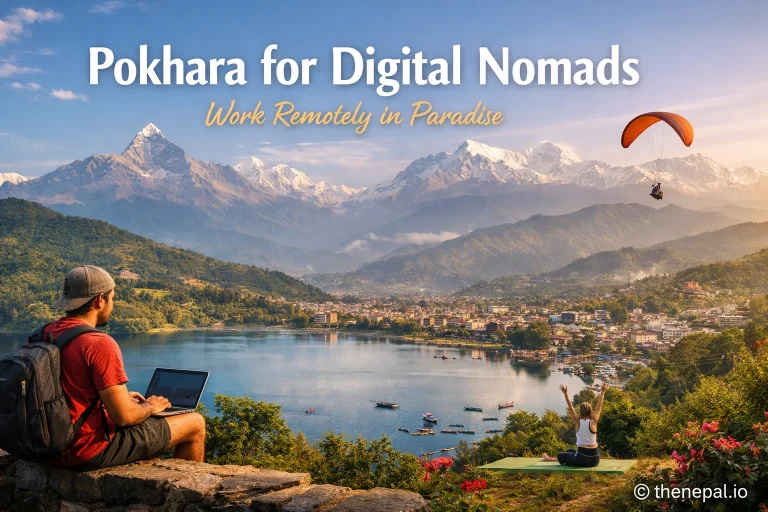
Imagine finishing a Zoom call in a Kathmandu café and walking out to the sight of ancient stupas, or coding by a lakeside in Pokhara with the Annapurna range reflected in the water. This guide covers everything you need to know about making Nepal your next remote office.
Why Nepal Is Becoming a Digital Nomad Destination
The shift in 2026 is driven by three major factors: infrastructure, policy, and peace.
- Modernized Tech: Fiber-optic internet has reached even the mountain towns.
- Vibrant Community: Kathmandu and Pokhara have shifted from “tourist stops” to creative hubs filled with developers, designers, and entrepreneurs.
- Unbeatable Balance: You can live in a bustling city and be on a world-class hiking trail within 30 minutes.
Digital Nomad Visa in Nepal (Current Situation & Updates)
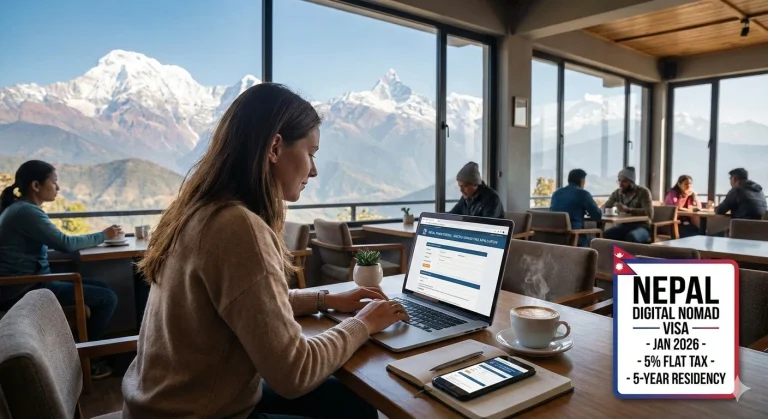
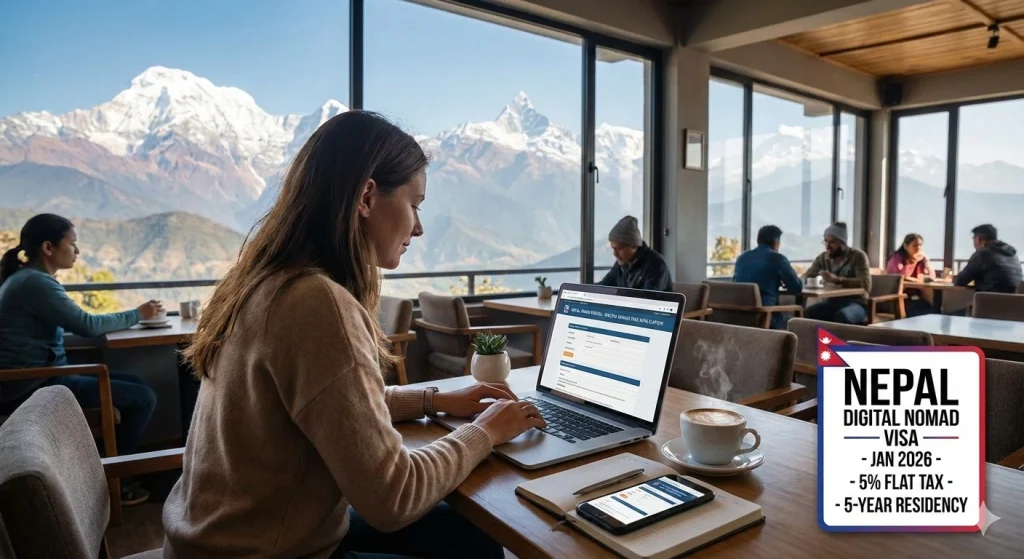
In a major move for 2026, the Nepalese government officially launched its Digital Nomad Visa. This has replaced the old “visa run” cycle that many remote workers used to endure.
| Feature | Details |
| Visa Duration | Up to 5 years (Multiple Entry) |
| Income Requirement | Minimum $1,500/month (foreign source) OR $20,000 bank balance |
| Tax Perk | Flat 5% income tax for stays over 183 days |
| Extras | Ability to open local bank accounts and register vehicles |
| Health Insurance | Minimum $100,000 coverage required |
Note: For short-term stays, the Tourist Visa on Arrival ($50 for 30 days or $125 for 90 days) is still a popular and easy option.
Best Cities in Nepal for Digital Nomads
1. Kathmandu: The High-Energy Capital
Kathmandu is for those who love “chaos with a soul.”
- Top Neighborhoods: Jhamsikhel (Jhamel) is the expat favorite, full of bakeries and quiet roads. Baluwatar is more upscale and residential, while Thamel is the energetic heart.
- Vibe: Intense, historic, and highly social.
2. Pokhara: The Lakeside Sanctuary
Pokhara is arguably the most beautiful digital nomad hub in the world.
- Top Neighborhoods: Lakeside North for quiet work, Lakeside Center for the social scene and coworking.
- Vibe: Relaxed, wellness-focused, and adventurous.
3. Patan (Lalitpur): The Creative Heritage Hub
Often considered a “mini-Kathmandu,” Patan is quieter and more artistic. It’s the go-to for writers and long-term residents who want to live in traditional Newari houses with modern interiors.
Cost of Living in Nepal for Digital Nomads
Nepal remains incredibly affordable. In 2026, a mid-range monthly budget looks like this:
- Rent (1-BR Modern Apartment): $250 – $450
- Food & Groceries: $200 – $350
- Coworking Membership: $70 – $120
- Mobile Data & Utilities: $30 – $50
- Leisure & Weekend Trips: $150 – $250
- Estimated Monthly Total: $700 – $1,220 USD
Internet & Coworking Spaces in Nepal
Gone are the days of “load shedding” (scheduled power outages). Most 2026 apartment rentals and all coworking spaces have battery backups or generators.
- ISPs: Providers like WorldLink and Classic Tech offer 100 Mbps to 1 Gbps plans. A 200 Mbps connection for your home typically costs around $15–$25/month.
- Mobile Data: 5G is active in the Kathmandu Valley. A 20GB data pack costs less than $8 USD.
- Recommended Coworking Spaces:
- Kathmandu: Rem.work HQ, Work Around Nepal, and NextWork.
- Pokhara: Pokhara CoWork and Himalayan Workspace.
Accommodation Options for Digital Nomads
- Serviced Apartments: Growing in popularity in Jhamel and Baluwatar; these include Wi-Fi and power backup.
- Boutique Homestays: Perfect for the first few weeks to get a feel for the local culture.
- Airbnb: Widely available, but always ask the host for a speed test and “power backup” status before booking.
Safety, Healthcare & Lifestyle
Safety: Nepal is exceptionally safe for solo travelers and women. Violent crime is rare; the biggest “danger” is usually a stomach bug from street food or a bumpy bus ride.
Healthcare: Stick to private hospitals in the capital like Norvic International or Grande City Hospital. For trekking, ensure your insurance covers helicopter evacuation.
Lifestyle Tips:
- Transport: Download Pathao or InDrive (the local Uber equivalent). They are cheap and reliable.
- Water: Never drink tap water. Use bottled or filtered water even for brushing teeth.
Pros & Cons of Being a Digital Nomad in Nepal
Pros
- Affordability: You can live a luxury lifestyle on a freelancer budget.
- Community: Nepalese people are famously hospitable and warm.
- Adventure: Your “weekend getaways” are Himalayan treks and paragliding.
- Tax Benefits: The 5% flat tax is one of the lowest in Asia.
Cons
- Pollution: Kathmandu can be dusty and congested in the dry season.
- Slow Pace: “Nepali Time” is real. Things don’t always happen fast.
- Infrastructure: While improving, rural roads and regional flights can be unpredictable.
FAQs About Digital Nomads in Nepal
Can I use my foreign credit card?
Yes, in major cities. However, Nepal is still very cash-centric. Use local ATMs (Nabil Bank and Standard Chartered are nomad favorites) to withdraw NPR.
Is 500 dollars a month enough to live in Nepal?
Yes, but it will be a “local” lifestyle. For a nomad lifestyle (private apartment, good Wi-Fi, cafes), budget at least $800.
Do I need a guide for everything?
For city living, no. For major treks (like Everest or Manaslu), government regulations often require a licensed guide for safety.