Hidden Gems of Pokhara: Offbeat Places Only Locals Know
Hidden Gems of Pokhara
Look, I get it. If it’s your first time in Pokhara, you have to do the classics. You have to row a colorful boat on Phewa Lake, watch the sunrise from Sarangkot, and maybe grab a beer at a busy bar in Lakeside. There is no shame in that; those places are famous for a reason.
But if you stay a little longer, the crowds at Lakeside might start to feel a bit much. You might start wondering, “Where do the people who actually live here go on a Saturday?”
The real magic of this city isn’t found in the souvenir shops. It’s found down the dusty side roads, up the steep hills that tourists ignore, and in the quiet tea shops (chiya pasals) where the mountain views are free and the company is warm.
If you are ready to trade the tourist traps for authentic experiences, here is your guide to the hidden gems of Pokhara—the offbeat places only locals know.
Read More : Best Lakes in Pokhara: Local Guide to Fewa, Begnas, Rupa
1. The “Other” Lakes: Begnas and Rupa
Most visitors treat Phewa Lake as the beginning and end of water bodies in Pokhara. But if you hop on a local bus or rent a scooter and drive 30 minutes east, you’ll find Begnas Tal and Rupa Tal.
Begnas Lake: The Local’s Picnic Spot
Begnas is grand, deep, and far cleaner than Phewa. You won’t find a thousand bars lining the shore here. Instead, you’ll find local families having picnics and fishermen (Majhis) silently paddling their dugouts.
- The Insider Move: Don’t just stay at the dam side. Hire a boat to take you across to the forest side for a short hike, or grab some fresh fried fish (machha fry) at a local eatery near the bus park. It’s fresh from the water and spicy.
Rupa Lake: Pure Serenity
Just a ridge away from Begnas lies Rupa Lake. It is smaller, quieter, and feels almost prehistoric. There are very few hotels here. It’s mostly just water, lotus flowers, and birds.
- The Hidden Gem: Hike the Sundari Danda ridge. It sits right between Begnas and Rupa. From the top, you can see both lakes simultaneously—one on your left, one on your right—with the Annapurna range towering behind them. It is a view that beats Sarangkot any day.
Read More :Adventure Activities in Pokhara — Paragliding, Zipline & Ultralight
2. Matepani Gumba: The Monastery with a View
While everyone rushes to the World Peace Pagoda (Shanti Stupa) for the sunset, the locals know that Matepani Gumba offers a more spiritual and peaceful experience.
Located on a hill above the city, this Buddhist monastery is an architectural masterpiece featuring intricate murals and statues. But the real secret is the atmosphere. Because it’s not on the main “tourist loop,” you won’t be fighting for space to take a photo.
You can sit on the steps, listen to the young monks chanting in the late afternoon, and watch the sun dip below the mountains. The view of the Pokhara valley sprawling out below is unmatched.
- Getting There: Take a taxi or local bus to Matepani (near Kundhar) and walk up the stone steps. It’s a bit of a workout, but the peace at the top is worth it.
Read More :Where to Stay in Pokhara: Best Hotels, Resorts & Budget Stays (2025 Guide)
3. Kahun Danda: The Sunrise Secret
Sarangkot is beautiful, but let’s be honest: elbowing 200 other people to see the sunrise kills the vibe.
Enter Kahun Danda.
This hill is on the opposite side of the valley from Sarangkot. It’s just as high, the view of the Machhapuchhre (Fishtail) mountain is actually closer, and best of all? You might be the only person there.
There is a small view tower at the top. The hike takes about 2-3 hours from the bottom, or you can drive most of the way up. It’s raw, it’s rugged, and it feels like a real adventure.
- Local Tip: Pack a thermos of coffee and some biscuits. There aren’t fancy cafes at the top, just pure nature.
4. Fusre Khola: The Canyon Walk
If you want to see the geology of Pokhara, go to Fusre Khola. This river cuts a deep, dramatic canyon through the southern part of the city.
Locals head here to swim in the natural pools or just hang out by the water. There is a distinct, moody beauty to the white water rushing over massive boulders. The area near the frantic suspension bridges offers great photography opportunities that look nothing like the typical “lake and mountain” photos.
- Warning: The currents here can be deceptive and dangerous. Admire the water, dip your feet in, but be very careful about swimming unless you are with a local who knows the safe spots.
Read More : Best Food in Pokhara : Top 10 Must-Try Foods & Restaurants in Lakeside
5. Ghachok Village: A Slice of Real Gurung Life
If you have a day or two, skip the commercialized treks and head north to Ghachok. It’s a traditional Gurung village about an hour’s drive from Pokhara.
This isn’t a “show village” set up for tourists. It’s a working agricultural community. You’ll see buffaloes being milked, millet drying in the courtyards, and grandmothers weaving on their porches. The views of Machhapuchhre from here are so close you feel like you can touch the snow.
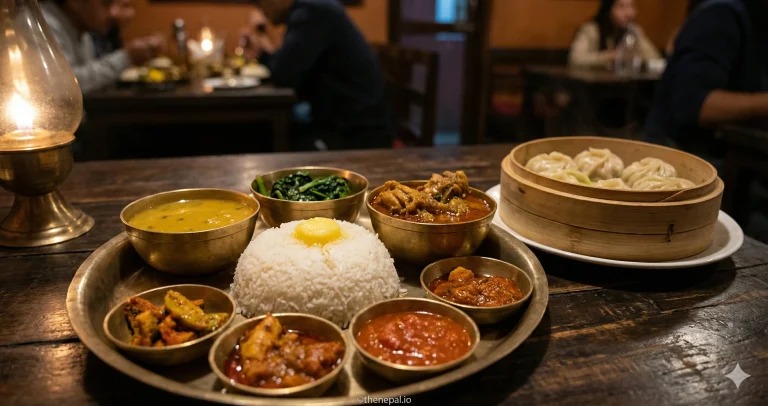
Stay in a homestay here. You’ll eat Dal Bhat (rice and lentils) cooked on a wood fire, which honestly tastes smokier and better than anything you’ll get in a restaurant.
Conclusion: Unlock Your Own Pokhara
Pokhara is comfortable. It’s easy to get stuck in Lakeside eating pizza and watching movies. But the soul of this place lies in the hills and rivers just outside that bubble.
Rent a scooter, jump on a crowded local bus, or just start walking toward a hill you don’t know the name of. The locals are friendly—a smile and a “Namaste” go a long way. Go find your own hidden gem.
Best Food in Pokhara : Top 10 Must-Try Foods & Restaurants in Lakeside
Are these offbeat places safe for solo travelers?
Generally, yes. Pokhara is very safe. However, places like Kahun Danda or Fusre Khola can be isolated. If you are solo, it’s always smarter to go during the day, tell your hotel where you are going, or hire a local guide/friend to tag along.
How do I get around to these local spots?
The most “local” way is the public bus—they are cheap and go everywhere (look for buses at Prithvi Chowk or Hallan Chowk). However, for freedom, renting a scooter (approx. 800-1200 NPR per day) is the best way to explore places like Begnas or Ghachok.
What is the best time to visit these hidden gems?
October to November and March to April offer the clearest mountain views. However, because these spots aren’t crowded, even the “off-season” is lovely. The monsoon season (June-August) makes the greenery around Rupa Lake and Matepani incredible, though the mountains might be hiding.
Do I need a permit to visit villages like Ghachok?
For Ghachok itself, usually no. But if you plan on hiking further up into the conservation areas (ACAP region), you will need a permit. Always check the latest checkpoint rules before heading deep into the trails.
What should I eat when I venture out of Lakeside?
Stop looking for burgers! Try Sel Roti (sweet rice donuts) at a street stall, Sukuti (dried meat) with beaten rice, or fresh river fish thali near Begnas Lake.