7 nearby places to travel in Kathmandu
Travel in Kathmandu
Kathmandu Valley is the capital and largest urban agglomerate of Nepal. Here you will visit the temple of the Living Goddess, who acknowledges the greetings of the devotees from the balcony of her temple residence. Kashtamandap temple is the source of the name Kathmandu and is supposed to be made from the timber of a single tree. It is also known as “the city of temples.
Pashupatinath Temple
Pashupatinath Temple, located on the banks of the Bagmati River, is one of the most important shrines to Shiva, not only in Nepal but in the entire world. This is the abode of Nepal’s national deity, Pashupatinath, the manifestation of Lord Shiva, where he is the father of all living beings in the cosmos. This is not a single monument but a sprawling collection of temples, shrines, ashrams, and occasional rock inscriptions, all packed together into one complex.

The main temple that houses Lord Pashupatinath Mandir in Nepal has a pagoda-style gilded roof, sides covered in silver, and the rest of it made of well-carved wood. The sacred Shiva lingam resides inside, guarded by his faithful servant, Nandi Bull. Shiva’s consort, Goddess Sati, has her own temple called Guheshwori. This is one of those temple precincts where cremations happen inside the premises. By the holy River Bagmati, Hindu people perform the final rituals for their deceased.
Pashupatinath Temple is one of the seven UNESCO World Heritage Sites in Kathmandu Valley. It is said that the 12 Jyotirlingas of India make up the body of Lord Shiva, while Pashupatinath Temple in Nepal is the head. One cannot help but feel mesmerized by the expanse of the temple complex and the spiritual atmosphere that hovers over the place.
Swayambhunath Temple
The famous stupa known as Swayambhunath Temple, and more recently referred to as the Monkey Temple with troops of the furry creatures running amok, is over 2500 years old, brims with Buddhist and Hindu iconography, and offers a bird’s-eye view of the city. An icon in Nepal, it features a stark white dome topped with a golden spire. The painted eyes on four sides represent the all-seeing eyes of Buddha, which are all-seeing and all-knowing.

This spiritual place of worship is an extraordinary experience, with the air filled with the fragrance of sweet incense and butter lamps and exquisite, intricate carvings adorning every space. The mystical atmosphere is further heightened by local devotees and pilgrims who make a ritual circumnavigation of the stupa, recite mantras, make offerings, spin the prayer wheels set into its base, and make wishes for the benefit of all beings devotedly every morning and evening.
Boudhanath Stupa
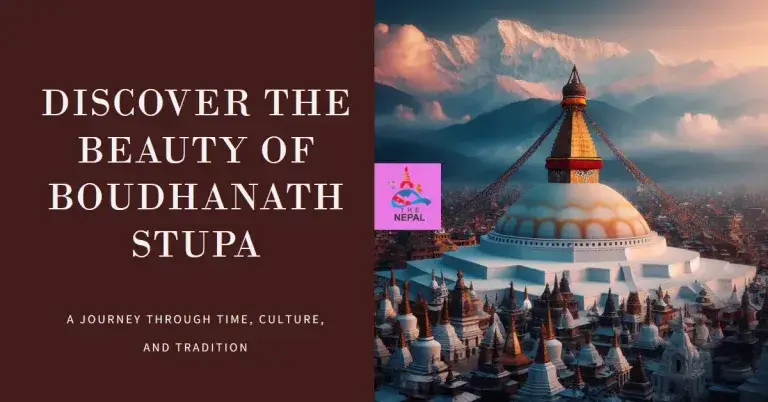
For hundreds of years, the Bodhanath Stupa has stood as a beacon of Buddhist belief, towering over the surrounding town as a giant mandala of peace and beauty with giant eyes.
Built some time around the 14th century, the huge meditative monument is said to have been created just after the passing of the Buddha. The huge offering site quickly became a focal point of worship and offering in the area. The structure of the building consists of a giant dome, on top of which sits a Buddhist pyramid tower.

All of this sits on top of huge steps shaped like mandalas themselves. Originally, the stupa’s spot was on an important trade route, which allowed for a steady stream of possible converts. Among the Nepalese in Kathmandu, the stupa is simply referred to as “Chorten Chenpo,” which translates to “Great Tower” or just “Great Stupa.” No matter what the pilgrims called it, they flocked to the monument in droves.
Hanumandhoka Durbar Square
Hanuman Dhoka Square (“UNESCO World Heritage Site”), also known as Kathmandu Durbar Square, is one of the major attractions in Kathmandu Valley. Most of the cultural centers of Nepal are concentrated around the Kathmandu valley; among those cultural sites, the most important one is the Hanuman-dhoka Durbar Square.

The name Hanumandhoka Durbar came from the statue of Hanuman established by King Pratap Malla at the entrance of the royal palace in 1672 A.D. The three-story residence built by King Prithvi Narayan Shah in 1770 is called Basantapur Durbar (palace). The whole complex is also known as Kathmandu Durbar Square. Located at the heart of the ancient city of Kathmandu, it is surrounded by both Hindu and Buddhist temples. Most of them are built in the pagoda style and embellished with intricately carved exteriors as well as Most of the buildings we see here date from the 15th to the 18th centuries.
The Durbar Square, with its old temples and palaces, epitomizes the religious and cultural life of the people. The major interesting things to see here are “Kumari (The Living Goddess) Ghar” ,Kastha Mandap,Maru Ganesh, Mahadev Temple, Shiva Parvati Temple, Bhagwati Temple, Old Palace, Saraswoti Temple, Krishna Octangular Temple, Big Drums, Kal Bhairav, Jagannath Temple, Taleju Temple, etc.
Patan Durbar Square
5 kilometers away from Kathmandu city is Patan, also known as Lalitpur, which is the city of fine arts. Enclosed within the city are four stupas, which are said to have been built in the 3rd century AD by Emperor Ashoka. It is listed as a UNESCO World Heritage Site. Patan is the oldest of all the three cities in Kathmandu Valley. It is best known for its artistic heritage. It is one of the oldest Buddhist cities in the world.

The city is situated on a plateau across the Bagmati River. Another name for Patan is Lalitpur. The city is surrounded by 4 stupas, one at each corner of its cardinal points. This is one of the most elegant architectural treasures, of which Patan is very proud. Really, it is full of Hindu temples and Buddhist monuments with bronze gateways, guardian deities, and wonderful carvings, and many visitors come here to see these monuments. Patan Durbar Square is a famous tourist attraction. The square is full of ancient places, temples, and shrines noted for their exquisite carvings.
The former royal palace complex is the center of Patan’s religious and social life and houses a museum containing an array of bronze statues and religious objects. There are three main courtyards, or chowks, in the square: Mul Chowk, Sundari Chowk, and Keshav Narayan Chowkning an array of bronze statues and religious objects. There are three main courtyards, or chowks, in the square: Mul Chowk, Sundari Chowk, and Keshav Narayan Chowk. The Sundari Chowk holds in its center a masterpiece of stone architecture, the Royal Bath called Tushahity.
Bhaktapur Durbar Square
Bhaktapur Durbar Square, as the city is also known, is a museum of medieval art and architecture with many examples of sculpture, woodcarving, and colossal pagoda temples consecrated to different gods and goddesses. It is 15 km from Kathmandu. It is a conglomeration of pagodas and shikhara-style temples grouped around a fifty-five-window palace of brick and wood.

The square is one of the most charming architectural showpieces of the valley, as it highlights the ancient arts of Nepal. The golden effigies of kings perched on the top of stone monoliths, the guardian deities looking out from their sanctuaries, and the wood carvings in every place—struts, lintels, uprights, tympanums, gateways, and windows—all seem to form a well-orchestrated symphony. Pottery and weaving are its major traditional industries. It was listed on the UNESCO World Heritage Monument List in 1979.
Nagarkot
Nestled about 32 kilometers east of Kathmandu at an elevation of 2185m, Nagarkot is a place that provides you with panoramic views of the mountains and the perfect scenic beauty around them. With its immense purity and outstanding ambience, it spreads fresh vibes, making you feel more energetic and zestful. Its most famous sunrise views over the giant mountains arrest the souls of all nature aficionados, making it one of the best places to visit near Kathmandu. It is the site of an ancient fort that was built to monitor the external activities of the kingdoms. So if you have less time to go very far from Kathmandu, then Nagarkot would be the best option.

Is it safe to travel to kathmandu now ?
There’s a low rate of serious crime in Nepal. However, you should take sensible precautions. Watch out for pick-pockets and bag-snatching, particularly in airports, on buses and in areas popular with foreign nationals like Thamel, Sanepa and Kupondol in Kathmandu. Take care when walking around at night.
| Read More |
|---|
| Muktinath Temple Travel |